




Right attitude key to good meditation experience
Meditation has gained popularity across the globe in recent years. People are learning meditation for various reasons, including stress reduction, calming the mind, and improving concentration. Some have spiritual aims such as developing self-awareness and having communion with God.
Various types of meditation are practised in the world, and they train the mind in different ways. There is simple concentration - on one’s breath, a mantra, or a candle flame. It improves our mental focus and calms the mind. Mindfulness involves observing our thoughts, sensations, and emotions without reacting. In Zen meditation, one sits still, with open awareness, sometimes counting one’s breaths or observing one’s thoughts.
Rajyoga involves seeing the self as a soul and remembering the Supreme Soul, the Father of all souls. When we relate to God in this way, the loving, emotional connection serves as a conduit for His virtues and powers to flow into the soul, enriching and empowering it.
Many wonder what is the most effective meditation technique, or what is the best way to meditate? There is no universal best technique. What is good for me depends on my aim: do I simply want relief from stress, to reduce overthinking, heal emotional wounds, develop discipline, or achieve spiritual growth? Depending on my objective, one of the many techniques may be most suitable for me.
However, focusing solely on the technique is a mistake. Meditation is not a technical procedure where following a prescribed formula or steps produces a predictable result. Success in meditation is less about the “perfect” technique and more about inner qualities and habits that allow any technique to work.
One of the most important of these is consistency. Meditation is like exercise, and doing it for 15-20 minutes daily is better than meditating for an hour once in a while. Regular practice brings progress, as it gradually improves our focus, enhances emotional stability, and develops discipline.
The right attitude is equally vital for success in meditation. Having the right attitude means being patient with gradual progress, instead of being frustrated or cynical about it. Being non-judgmental when the mind wanders or unwanted thoughts arise, and kindness towards the self -- self-criticism is often a bigger obstacle than mental distraction –- also help.
We may be using the best technique, but if we practise meditation with pressure, judgment, or self-criticism, our experience and progress would not be the same as that of someone who does it with a healthy, relaxed attitude.
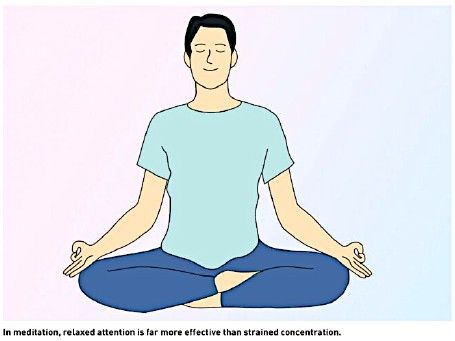
One simple secret to successful meditation is that relaxed attention is far more effective than strained concentration. We need to be alert but not tense, and at the same time relaxed but not sleepy. Having this balance makes our practice of meditation smooth and naturally deep.
When we are learning to meditate, one mistake we may sometimes make is to expect a specific result at the very outset, such as an experience of bliss, a blank mind with no thoughts, or absolute silence. Having such expectations creates tension, which is a major obstacle to having a good meditation experience. Instead, when we let go of such expectations and practise sincerely, results arise naturally, and our experience – of calm, bliss, stability – gradually deepens.

B.K. Surya is a Rajyoga teacher at the Brahma Kumaris headquarters in Mount Abu, Rajasthan.
In meditation, relaxed attention is far more effective than strained concentration.