




Plato’s Cave and our search for reality
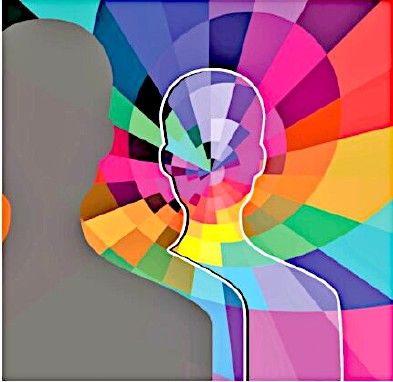
Are we trapped in appearances or we recognize reality?
Across time, cultures, and languages, human beings have asked the same profound questions: Who am I? What is the nature of reality? How can I know what is truly real? What is a good life?
From the dawn of civilisation, we have looked at the world and wondered. "Is it in human capacity to awaken to a deeper understanding of ourselves and the world?”
In the Western tradition, this search for truth found one of its most powerful expressions in ancient Greek philosophy. The word philosophy itself is Greek: philo = love, and sophia= wisdom.
The pre-Socratic philosophers were mainly concerned with nature, the origin and order of the cosmos, and the fundamental principles underlying the physical world, moving from mythological explanations towards reason and inquiry.
With Socrates, the emphasis shifted towards the human being: the ‘experiencer’ of the world, the one who seeks and choses to live a virtuous life. As he famously said, “An unexamined life is not worth living.”
Plato, his admirer and student, carried these questions further. What if appearances are not reality? Is it possible to distinguish what is real?
For Plato, education was a turning of the whole person towards what is real, rather than accumulating knowledge.
He expressed this journey through dialogues and allegories. In his dialogue of ‘The Republic’, through the Allegory of the Sun, the Divided Line, and the Allegory of the Cave, Plato presents a powerful image of the human condition and our journey towards reality.
In the Allegory of the Cave, Socrates asks his student: Imagine people who have lived since childhood deep inside a cave, chained so that they cannot turn around. All they can see all their lives is the wall in front of them. Behind and above them is a fire, and between the fire and the prisoners, people carry objects whose shadows are projected onto the wall. Having known nothing else, the prisoners — who are none others than us — take these shadows for reality.
This is the first level within the cave: a world of shadows and appearances, where what we experience through the senses seems to be the whole of reality. But there is another level within the cave. One prisoner is released and forced to turn around. With pain and difficulty, he discovers the fire and the objects producing the shadows. What he had believed to be reality is revealed to be only an image of something else. Yet he is still inside the cave. Plato shows us that what we take to be reality may itself be only a representation of something deeper and more real.
The prisoner is then dragged out of the cave. At first, the light is painful, but gradually his vision adjusts. He can now see reflections, then the things themselves, and finally the sun, the cause of everything else. The journey is, therefore, not simply from one place to another, but from one way of seeing to another, from shadows to appearances, to a clearer apprehension of what truly is.
Behind this journey lies Plato’s distinction between the physical world of the senses in which all things are changing and imperfect. Beyond them, Plato proposes eternal realities — such as beauty, justice and equality. A beautiful thing may change or disappear, but beauty itself does not. Ultimately, just as the sun makes seeing possible in the visible world, the Spiritual Sun — God — makes knowledge and understanding possible in the spiritual world. The journey towards truth is not simply an escape from the world, but a transformation of our vision — and ultimately a responsibility to help others. The prisoner decides to return to the cave to release the prisoners.
Two and a half thousand years later, this ancient journey is still our story.
Perhaps we can now ask: Where is my interest and attention? What am I looking at?
If my attention, and so my awareness, is constantly fixed on the “wall” of the cave — on appearances, beliefs, stories and images — I become trapped within these interpretations of my own mind without recognizing that they are shaped by the shadows I have taken for reality.
Turning inwards can be painful. Yet, when we become ready to question our assumptions about reality, a deeper clarity becomes possible. A teacher will appear through people, situations, or moments in our lives.
The journey from the shadows towards reality is therefore not only Plato’s journey. It is ours.

Anna Doiliani is a teacher of Greek literature and philosophy. She spent 20 years coordinating Brahma Kumaris activities in the Middle East and is now based in Greece, her native country.