




Mind What Goes Into Your Mind
By: B.K. Shivani
Source: The Daily Guardian https://epaper.thedailyguardian.com/2026/05/22/e-paper-today-delhi-23-may-2026/
Dated: May 23th, 2026
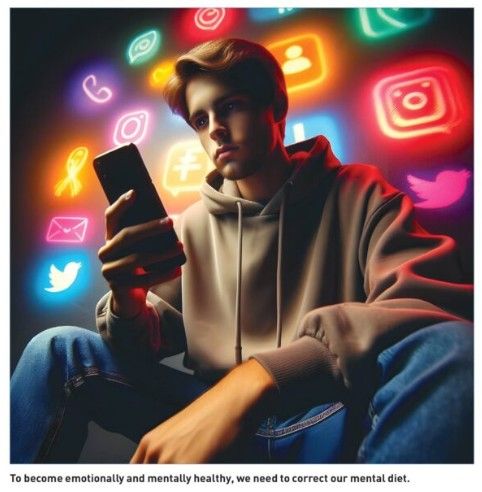
In today’s world, staying informed often feels like a responsibility, and news updates, social media feeds, and other notifications constantly seek our attention. It is well worth asking ourselves if all this information is nourishing our inner world or quietly disturbing it?
Many people take pride in being aware of everything happening around the globe. However, does knowing every detail about the outside world truly serve our life’s purpose? Is our role simply to accumulate information, or is it to take responsibility for what is happening within us? The outer world is vast and largely beyond our control. We can observe it, discuss it, and even criticise it, but we cannot directly change it. What we can influence, however, is our inner world — our thoughts, emotions, and responses. This is important because the quality of our inner state determines the impact we have on the world outside.
The idea that “you are what you feed your mind” is especially relevant here. Just as the body reflects the food we eat, the mind reflects the information we consume. When we repeatedly expose ourselves to negativity — violence, fear, anger, and criticism — these impressions begin to shape our inner reality. Over time, they influence our thinking patterns, form our habits, and eventually define our personality. If the outside world is filled with unrest and we continuously absorb it, the same unrest begins to take root within us. Without realising it, we start mirroring the very negativity we complain about.
Every thought we create carries energy, and this energy forms our aura, or the invisible energy field that surrounds us and affects others. Our interactions, conversations, and even silent presence radiate this energy into the environment. When our minds are filled with the negativity we have consumed, that is exactly what we project outward. In this way, we unknowingly become contributors to the collective emotional climate of the world. This realisation raises an important question: if we are participating in creating the negativity around us, do we have the right to complain about it?
The solution does not lie in withdrawing completely from the world, but in becoming more conscious and sensible about how we engage with it. Just as we choose what food to eat based on our physical health, we must choose what information to consume, for our mental and emotional well-being. Not everything that is available needs to be internalised. Even if people around us indulge in negativity, we are not compelled to do the same. A person who values health makes careful dietary choices regardless of what others are eating. In the same way, a person committed to inner peace can develop the discipline to choose what enters their mind.
When we spend time in a spiritually elevated environment or in the presence of someone we respect for their wisdom, we naturally align our thoughts and words with higher values. We avoid unnecessary or negative conversations and engage in more meaningful dialogue. This shows that we already have the ability to regulate our mental intake; it simply needs to be practised consistently in daily life.
If we wish to become emotionally strong and mentally healthy, we need to correct our mental diet. By consciously choosing uplifting content, engaging in constructive conversations, and limiting exposure to negativity, we begin to rebuild inner stability. Protecting our inner world is not an act of isolation; it is an act of responsibility. When our thoughts become pure and stable, the energy we radiate into the world changes as well. This positive energy influences others in subtle but powerful ways, contributing to a more harmonious environment.
The world outside is ultimately a reflection of the collective inner states of individuals. Every mind contributes to the larger picture. When we take responsibility for our own thoughts instead of merely reacting to external events, we begin to shift from being passive consumers of information to conscious creators of reality. Instead of constantly asking what is happening in the world, we can begin to ask what is happening within us and what we are contributing through our thoughts and feelings.
This shift in awareness transforms our role. By taking care of our inner world, we not only protect ourselves from unnecessary disturbance but also become a source of stability and positivity for others. In doing so, we participate in shaping a better world — not by controlling external circumstances, but by transforming the only space we have authority over: our own mind.

B.K. Shivani is a well-known motivational speaker and Rajyoga teacher.