




Managing fear and anxiety
How many of us come to know when our mind gets disturbed? Some do not recognize the disturbance. When does the mind get disturbed, and how do we feel the disturbance, what exactly happens? One sign is that we cannot concentrate; we may feel pained inside, or become irritated, which shows in our behaviour. We can easily tell when someone is disturbed if it shows in their behaviour. But that is a late stage of the 'illness'. If we check the disturbance when it is confined to our thoughts, it does not grow and influence our behavior. When the disturbance goes beyond the mind and affects the body, our heart begins to beat faster - because of anxiety and fear.
Many people have become habituated to creating fearful thoughts. We ourselves may be suffering from this malady. What if someone sitting next to you says, "I fear I might fall off this sofa... its leg might break." What will you do if the other person keeps repeating this? Will you be dismissive, or will you try to reassure them that nothing of the sort will happen? If you love the other person, you will talk to them gently and try to convince them that there is no reason they should fall off the sofa. Eventually, your power of conviction and your love for the other person will remove their fear and heal them. This kind of a dialogue often takes place in our mind - a negative thought arises and we try to counter it with a corresponding positive thought. If we leave the mind unchecked to create and dwell on thoughts of fear, failure, and doubt, it might become our default way of thinking, without our realizing it.
This harmful pattern of thinking can be changed, and I do not need to seek anyone’s help for it. The best person to go to for healing, so that there is no dependence on anybody else, is the self. Sit back, be with yourself, and if you are not able to say it to yourself, write out your thoughts. The mind is saying, “What if I fail... what will happen to my family... who will take care of my children...? Write down this thought, and under the thought write the counter-thought. By doing this we gradually teach the mind, the way we teach a baby, the right way of thinking.
Do not allow the mind to speak a language that depletes your energy, and that of the people around you. Just as we encourage and motivate others when they are a bit down, we can do the same with the self. Every time the mind creates weak, defeatist thoughts, we need to guide it towards a constructive way of thinking. With persistence, the power of positivity will prevail over negative thoughts. This is the way to remain strong and happy in all situations.
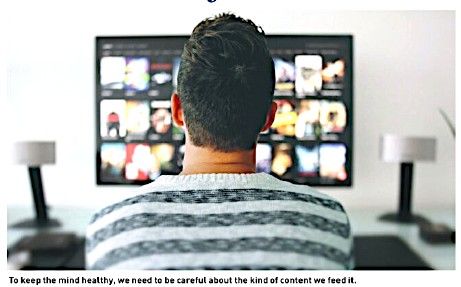
We also need to watch what we feed the mind - the information we put into it. If I start my day by watching news about the terrible things happening around the world, or if I regularly watch crime thrillers, that is the easiest way to cultivate fear. Some time ago I was with someone on a plane, and throughout the two-hour flight he watched a crime-based serial. Later, we were together in a meeting with other people, and during a discussion he said, "After I leave home I am not sure if I turned off the gas, or locked the door." So he has devised a way to deal with the persistent anxiety. He said: "After I turn off the gas, I take a photo of it. When I switch off the lights, I take a photo of it, and then when I lock the door, I take a photo of it." During the day, when he becomes anxious about if he locked the door, he looks at the photo and tells himself that this is the truth. This is how what we consume, or put into the mind, creates a 'sanskar' of fear and anxiety.
When we watch such things, we think it is nothing to do with our life, it is happening in another part of the world, or it is just a story. But the negative energy of the story is what we are feeding our mind. What do we do when we have to feed a baby? We sterilize the feeding bottle. We take great care about what we give to the baby. Similarly we need to take care of our mind and feed it only clean, healthy information - especially at the start of the day. If we pay attention to this, our mental environment and way of thinking will change, saving us a lot of fear and anxiety.

B.K. Shivani is a well-known motivational speaker and Rajyoga teacher.
To keep the mind healthy, we need to be careful about the kind of content we feed it.