




Caring for Aging Parents: Love, Acceptance, and Understanding
Recognizing the Changes
When I first noticed changes in my mother's behavior, I did not understand what was happening. It took me about a year and a half to realize that what I was witnessing was real for her.
My mother had a difficult childhood. She was orphaned at seven, experienced abuse, and had me when she was seventeen. In many ways, I felt I had always been her mother. My love and respect for her are rooted in the fact that, despite her own circumstances, she protected me.
Acknowledging Our Feelings
As her behavior changed, I became irritated almost every day. During family breakfasts, she would sometimes do something that seemed out of character, and I would leave the table because I could not take it anymore. Later, I would regret my reaction.
This was difficult because my mother had been a very good Brahma Kumaris teacher for more than thirty years. I felt my inner strength diminishing, and I did not like the person I was becoming.
I sat with my family and told them, “I don't like the person I'm becoming.” We also recognized the need to find a good doctor who could help her. Gradually, the irritation became less frequent—first every two days, then every four days, and eventually once every week or two. I began to accept the change.
Blessings and Empathy
At night, when I am lying in bed and my mother is in her room, I send her blessings and good wishes. I think she may remember what she needs to remember. I try to understand how she might be feeling.
I once spoke with a person who had Alzheimer's. She told me, “I can't find myself. I don't know where I am inside me anymore.” Those words helped me understand that an aging parent may be struggling internally, even when we cannot see it.
My mother may suddenly sing or dance, even in a public setting. We need to allow our aging parents to express themselves and respond with understanding.
Choosing Acceptance
I believe one of the greatest sources of suffering for caregivers is the desire not to be in the situation. The thought “I don't want to do this” makes the responsibility feel heavier. When we change that desire into acceptance, our tolerance can increase. We can see it as an opportunity to learn and grow.
I remind myself that my mother would not be in my life in this way without a reason. God continues to love us despite our imperfections, and we can extend that same love to others.
Remembering the Caregiver
Caregivers also need care and acknowledgement. People often ask me how my mother is doing, but sometimes I wish someone would ask how I am. When my brother visited, he praised how well my mother was doing. I told him, “She's great. I'm not.” He then asked, “Sister Jenna, how are you?” That simple question meant a great deal.
Looking after someone who is unwell requires a great deal of energy. In some places, families can also receive practical help from medical services, including nurses who visit the home and assist with elderly care. Such support can make a difference. It is important that the responsibility does not rest silently on one person. When we share our feelings and responsibilities, we can hold one another together and make the experience more manageable with genuine care.
Cherishing Good Memories and Remembering Karma
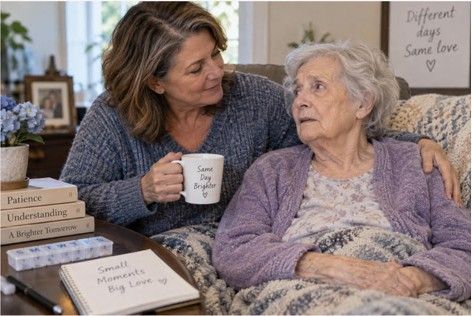
I sit with my mother, hug her, and ask her to tell me stories from my childhood. I also ask her about her most meaningful experiences with God, and I can see her spirit brighten. I wish for her to remember what she needs to remember and forget what she does not need to remember.
If we revisit the past, I believe we should choose memories that were good for us. We must remember that we, too, will grow old, and one day someone may care for us. The law of karma reminds us to treat others with care.
To accept our shortcomings, we need courage. Honesty gives us that courage, and through an honest relationship with God, we can transform ourselves. Caring for aging parents asks us to practice love, patience, acceptance, and understanding—not only for them, but also for ourselves as caregivers.
Now that my mother is not with me physically, I gratefully remember the lessons I was lucky to learn in her presence.

Sis. Dr. Jenna Director, Brahma Kumaris, Washington, DC